Licencia Creative Commons Atribución 4.0 Internacional (CC BY 4.0)
Revista Cátedra, 9(1), pp. 90-112, January-June 2026. e-ISSN: 2631-2875
https://doi.org/10.29166/catedra.v9i1.8539
Use of the Educaplay Educational Platform in
the Literacy Process of Primary Education
Students (ISCED Level 1)
Uso de la plataforma educativa Educaplay en el proceso
de lectoescritura en estudiantes de educación primaria
(nivel ISCED 1)
Elizabeth Pesántez-Carmona
Universidad Nacional de Educación, Azogues, Ecuador
Maestría en Tecnología e Innovación Educativa
pepesantez@unae.edu.ec
https://orcid.org/0009-0002-7885-1107
Diana Cevallos-Benavides
Universidad Nacional de Educación, Azogues, Ecuador
Maestría en Tecnología e Innovación Educativa
diana.cevallos@unae.edu.ec
https://orcid.org/0000-0002-5924-5737
(Received on: 19/07/2025; Accepted on: 1/08/2025; Final version received on: 12/12/2025
Suggested citation: Pesántez-Carmona, E. y Cevallos-Benavides D. (2026). Use of the
Educaplay Educational Platform in the Literacy Process of Primary Education Students
(ISCED Level 1). Revista Cátedra, 9(1), 90-112.
Abstract
This research was conducted in a public school located in the urban center of Cuenca,
Ecuador, with primary school students (ISCED Level 1) who are experiencing difficulties in
developing literacy skills. To address this problem, a pedagogical intervention was designed
based on the Technological Pedagogical Content Knowledge (TPACK) model and the
theoretical foundations of constructivism and constructionism, integrating the use of the
Educaplay educational platform as a technological resource for developing interactive
activities. The research adopts a mixed-methods approach and is structured using

91
Licencia Creative Commons Atribución 4.0 Internacional (CC BY 4.0)
Revista Cátedra, 9(1), pp. 90-112, January-June 2026. e-ISSN: 2631-2875
https://doi.org/10.29166/catedra.v9i1.8539
Sequential Transformative Design (DITRAS). Data collection included observations of
classroom sessions with and without the use of technology, a survey administered to
primary school teachers at the institution, and interviews with experts in the field of
Language and Literature. The results show that the interactive activities designed in
Educaplay significantly increased aspects such as attention, motivation, and academic
performance of the students, especially with regard to phonological and syllabic skills and
reading comprehension. In conclusion, the pedagogical intervention, based on the global-
analytical approach and the development of linguistic awareness and reading
comprehension in the early stages, combined with the appropriate use of interactive
activities on the Educaplay platform, fosters meaningful, motivating, and autonomous
learning in the initial phases of the reading process.
Keywords
Linguistic awareness, Educaplay, literacy, global-analytical method.
Resumen
La presente investigación se llevó a cabo en una unidad educativa fiscal ubicada en el centro
urbano de la ciudad de Cuenca-Ecuador, con estudiantes de Educación Primaria (Nivel
ISCED 1), quienes presentan dificultades en el desarrollo de habilidades de lectoescritura.
Con el propósito de atender esta problemática, se diseñó una intervención pedagógica
sustentada en el modelo Conocimiento Tecnológico Pedagógico del Contenido (TPACK) y en
fundamentos teóricos del constructivismo y el construccionismo, integrando el uso de la
plataforma educativa Educaplay como recurso tecnológico para el desarrollo de actividades
interactivas. La investigación adopta un enfoque mixto y se estructura mediante el Diseño
Transformativo Secuencial (DITRAS). Para su desarrollo, se realizaron observaciones de
sesiones de clase con y sin el uso de tecnología, una encuesta dirigida a docentes de primaria
de la institución, y entrevistas a expertos en el área de Lengua y Literatura. Los resultados
evidencian que las actividades interactivas diseñadas en Educaplay incrementaron
significativamente aspectos como la atención, la motivación y el desempeño académico de
los estudiantes, especialmente, en lo que respecta a habilidades fonológicas, silábicas y a la
comprensión lectora. En conclusión, la intervención pedagógica, sustentada en el enfoque
global-analítico y en el desarrollo de las conciencias lingüísticas y la comprensión lectora en
etapas iniciales, combinada con el uso adecuado de actividades interactivas en la plataforma
Educaplay, favorece un aprendizaje significativo, motivador y autónomo en las primeras
fases del proceso lector.
Palabras clave
Conciencias lingüísticas, Educaplay, lectoescritura, método global-analítico.
1. Introduction
Today, education is a fundamental pillar that guarantees students' rights to receive a quality
education tailored to their needs. The United Nations Educational, Scientific and Cultural
Organization (2023) emphasizes its position on technology in education:
Learning to live both with and without digital technology; taking what is
necessary from an abundance of information, but ignoring what is not;
letting technology help, but never supplant, the human connection on
which teaching and learning are based… We must focus on learning

92
Licencia Creative Commons Atribución 4.0 Internacional (CC BY 4.0)
Revista Cátedra, 9(1), pp. 90-112, January-June 2026. e-ISSN:2631-2875
https://doi.org/10.29166/catedra.v9i1.8539
outcomes, not on the digital contribution. To contribute to improving
learning, digital technology should not replace face-to-face interaction
with teachers, but rather complement it (p. 24).
Therefore, quality education must be grounded in the principles of social equity and the
pressing need to ensure truly inclusive educational processes. In some educational contexts,
inclusion is considered a way of managing the needs exclusively of students with
disabilities. However, in the international context, this concept involves a much broader
vision related to “a reform that supports and addresses the diversity of all learners” (United
Nations Educational, Scientific and Cultural Organization, 2009, p. 6). This means that
educational processes must consider disabilities and, in addition, the different learning
difficulties and styles of students.
SDG 4 calls for “ensuring inclusive and equitable quality education” (UN, 2015, p. 16), which
requires strengthening literacy instruction from the earliest stages. International
assessments demonstrate this urgency; for example, The PIACC program showed that
Mexico is at level 2 in reading proficiency, while Ecuador has 38% of its students at level 1
(National Institute for Educational Evaluation, 2019, pp. 23–54); similarly, PISA-D reported
that “51% of 15-year-olds have low reading performance” (National Institute for
Educational Evaluation, 2018, p. 41), and the ERCE revealed that “44% of 3rd-grade
students and 68.8% of 6th-grade students are at the minimum proficiency level” (UNESCO,
2022, p. 12).
At the national level, the Ser Estudiante test revealed that 58% of elementary school
students do not reach the minimum level in Language and Literature and that 68% present
“6 or more spelling errors in their compositions” (National Institute for Educational
Evaluation, 2025, pp. 25–35). Finally, Ecuadorian legislation on education guarantees
inclusive education and establishes that:
All students must be assessed, if necessary, to determine their
educational needs and the characteristics of the education they require.
The education system will promote the early detection and intervention
of special learning difficulties and learning-related factors that put these
children and young people at risk, and will take measures to promote
their recovery and prevent them from falling behind or being excluded
from school (Ministry of Education, 2012, p. 7).
This inclusive approach highlights the commitment to protecting students' rights and
addressing their needs promptly. In this context, analyzing and understanding the
ambitious demands of the outside world is fundamental to providing quality education and
implementing education laws at the smallest levels.
This study was conducted in a public school located in the urban area of Cuenca, in the
province of Azuay, where it was identified that primary school students (ISCED Level 1),
afternoon session, exhibit significant difficulties in developing literacy skills. According to
the results of the diagnostic test administered at the beginning of the school year, a group
of students was identified who present more severe problems with the development of
these skills and who, although they do not have a prior psychoeducational diagnosis, show
signs related to learning difficulties. Learning difficulties are defined as “various problems
that share the undeniable fact of difficulty in learning optimally, that is, effectively, within
the established timeframe, and without extraordinary human and material resources”
(Romero-Pérez & Lavigne-Cerván, 2005, p. 9).
93
Licencia Creative Commons Atribución 4.0 Internacional (CC BY 4.0)
Revista Cátedra, 9(1), pp. 90-112, January-June 2026. e-ISSN: 2631-2875
https://doi.org/10.29166/catedra.v9i1.8539
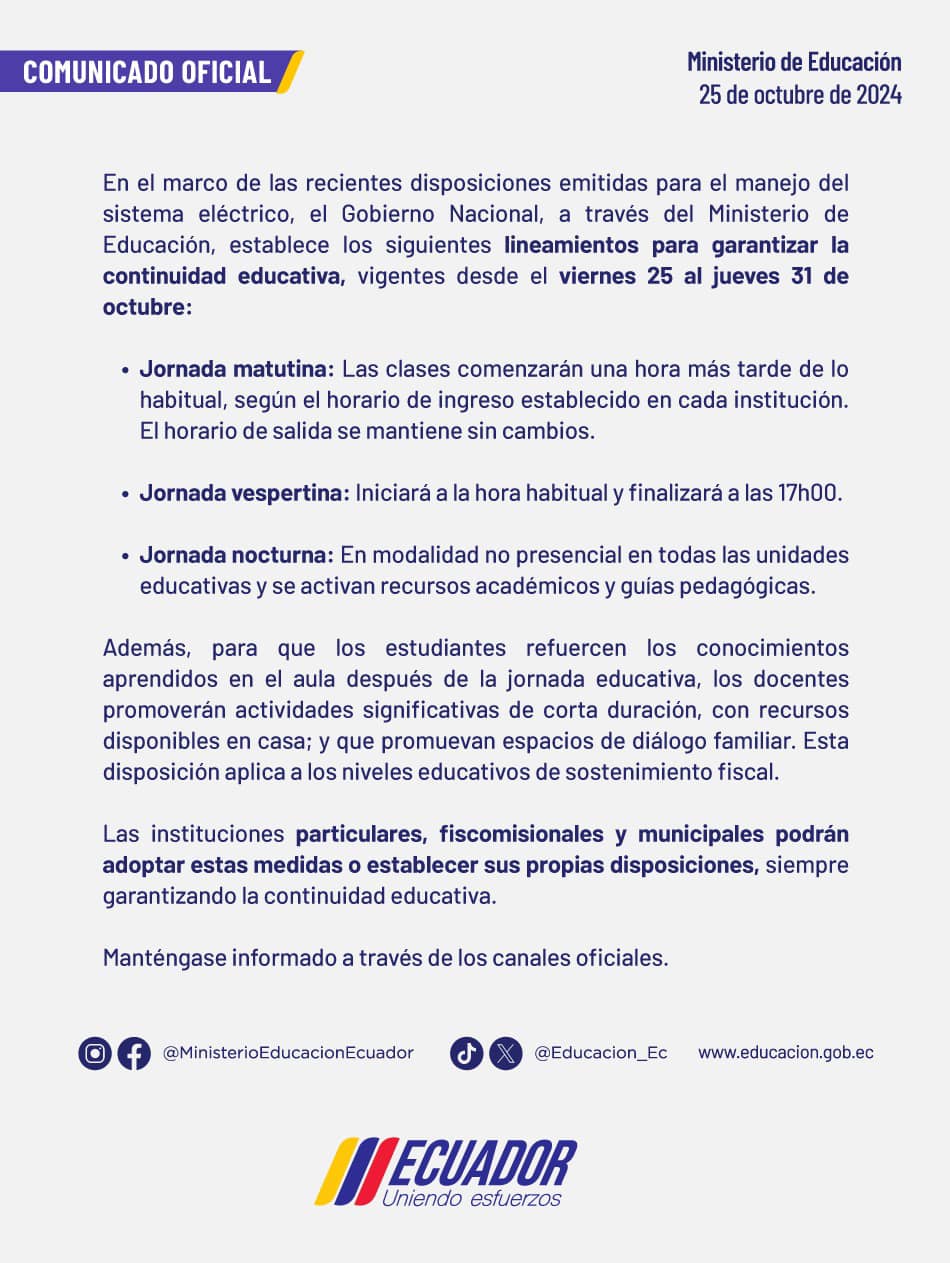
On the other hand, the adverse circumstances facing the Ecuadorian education system, such
as the reduction of class hours in the afternoon session, established in the guidelines to
guarantee educational continuity during the national energy crisis (Ministry of Education,
2024), are factors that hinder the normal development of planned activities in educational
institutions and exacerbate the situation for this group of students. In this context, it is
necessary to implement a pedagogical strategy to compensate for lost time and ensure that
students can reinforce their learning at home.
Given the problem described, the following research question is posed: How can the
development of literacy skills be strengthened in primary school students (ISCED Level 1)?
This research seeks to analyze the pedagogical strategies that can be implemented inside
and outside the classroom to strengthen the literacy skills of this group of students. In this
sense, it is considered necessary to select the most appropriate methods for teaching
literacy. Based on the research question, the general objective is to strengthen the literacy
skills of primary school students (ISCED Level 1) through interactive activities on the
Educaplay educational platform. To this end, the following specific objectives are
established: to identify the main difficulties in the literacy process of this group of students;
to design an educational intervention proposal that adapts to the TPAK model and includes
interactive activities from the Educaplay platform for literacy development; and to assess
student progress throughout the process. This study summarizes the most relevant
elements and considerations developed in the thesis work of Pesántez-Carmona and
Cevallos-Benavides (2025), which focused on the use of the Educaplay platform as an
educational resource to strengthen the literacy process in primary school students (ISCED
Level 1). Regarding the organization of the article, section 2 presents the concepts and
theoretical foundations related to the research; section 3 presents a review of studies and
experiences on the use of digital resources in literacy; section 4 describes the methodology
employed; section 5 shows the results obtained during the implementation of Educaplay;
and finally, section 6 presents the conclusions of the study.
2. Literature review
2.1 Language teaching methodology and national curriculum for the development
of literacy
The Ecuadorian curriculum posits that learning to read and write is a multifaceted process,
encompassing four main areas that must be addressed simultaneously. These areas are: the
language system, written production, text comprehension, and written culture. This holistic
view recognizes that the development of reading and writing is not limited to technical
aspects but also includes social and cognitive practices. In this context, the language system
consists of learning the alphabetic code, developing linguistic awareness, and mastering
spelling (Ministry of Education, 2016, p. 76).
2.2 Initial teaching of the alphabetic code and linguistic awareness
Learning the alphabetic code is fundamental to literacy processes, allowing students to
understand the relationship between sounds and graphemes. However, in traditional
schools, teaching the alphabetic code is often confused with teaching literacy, since knowing
how to read and write is much more than learning a code and correctly forming letters. This
is why the Language and Literature curriculum "suggests a path for teaching the phoneme-
grapheme relationship (alphabetic code), whose objective is to overcome the associative
methods of rote memorization" (Ministry of Education, 2016, p. 80). This phonological path
94
Licencia Creative Commons Atribución 4.0 Internacional (CC BY 4.0)
Revista Cátedra, 9(1), pp. 90-112, January-June 2026. e-ISSN:2631-2875
https://doi.org/10.29166/catedra.v9i1.8539
includes three stages. The first consists of developing linguistic awareness, the second, the
phoneme-grapheme relationship, and the third, conventional orthographic writing.
This curricular proposal is not entirely feasible, since it suggests that the teacher should not
intervene in syllable formation and that this process should develop intuitively in the
student. This idea is far removed from what is intended and what actually happens in the
classroom. Students in the early stages of literacy already struggle with identifying and
memorizing the similar sounds of some letters of the alphabet. If the teacher doesn't
intervene to explain that these letters, when combined with vowels or other consonants,
form syllables, and that these in turn generate other sounds, reading will be much more
complex and the learning process much slower. It is not surprising, then, that in
assessments administered by the National Institute for Educational Evaluation to fourth-
grade students, 66.8% have difficulties with spelling, particularly with the use of accent
marks: “Level 0.- The text presents six or more spelling errors (use of accent marks on acute,
grave, and proparoxytone words; use of capital letters).” (National Institute for Educational
Evaluation, 2025, p. 33). These results confirm that syllabic awareness has not been
addressed at previous levels. At this point, it is crucial to consider that linguistic awareness,
including syllabic awareness, must be developed simultaneously.
2.2.1 Linguistic awareness
As previously stated, an essential element for learning to read and write is the development
of linguistic awareness, which manifests itself in the understanding of various levels of
language: lexical, semantic, syntactic, and phonological. The development of linguistic
awareness not only allows for the identification and manipulation of language units but is
also fundamental for accessing the writing system in a comprehensive and functional way.
In this regard, the Ministry of Education of Ecuador recognizes that its development is
fundamental for literacy learning and explains the following:
The development of linguistic awareness encompasses the development
of lexical awareness (word morphology and the word as the smallest unit
of speech), semantic awareness (the meaning of words, phrases,
sentences, and longer texts), syntactic awareness (the relationship
between words within a sentence), and phonological awareness
(sounds). The latter is primarily addressed in relation to phoneme-
grapheme correspondence (Ministry of Education, 2016, p. 79)
The development of each of the linguistic awareness levels mentioned in the curriculum
plays a crucial role in literacy learning and must be addressed simultaneously. These levels
of awareness are interconnected, enabling children to understand, construct, and produce
language meaningfully. Therefore, from a pedagogical perspective, teachers must be able to
design integrated, engaging, and contextualized activities that foster metalinguistic
reflection from the earliest years of schooling.
2.3 The teacher's role as a mediator of language learning
The constructivist educational approach considers that all students, as native speakers,
arrive at school with cognitive, affective, and motor skills. That is, they possess prior
knowledge upon which new learning is built. In this sense, “the role of the school is precisely
to mediate the learning that students do not acquire on their own” (Ministry of Education,
2016, p. 83). Thus, the teacher's role serves as scaffolding for students to connect their prior
knowledge with new experiences.

95
Licencia Creative Commons Atribución 4.0 Internacional (CC BY 4.0)
Revista Cátedra, 9(1), pp. 90-112, January-June 2026. e-ISSN: 2631-2875
https://doi.org/10.29166/catedra.v9i1.8539
The curriculum guidelines establish that “at the Elementary Basic Education level, the
teacher has the responsibility to teach reading and writing” (Ministry of Education, 2016, p.
76), using the phonological approach detailed above. Consequently, the Language and
Literature curriculum addresses specific skills that integrate the use of Information and
Communication Technologies (ICTs) to improve oral communication, reading, and writing
abilities. In this sense, the teacher's role consists of adopting "a fundamental role as
mediator, facilitator, and creator of the necessary conditions for learning to occur" (Aboal
et al., 2015, p. 233). In other words, the teacher must not only have sufficient mastery of the
content the students are learning but must also be able to diversify the use of teaching
resources to address different learning styles.
2.4 Methodological approaches to literacy
There are various teaching methods for the literacy process. Traditionally, three main
approaches are distinguished: synthetic, global or analytical, and mixed. Below is a
comparative table summarizing the main characteristics of each method, its subtypes, and
the sources that support them.
Method
Models/subtypes
Description
Source
Synthetic
Alphabetic,
Syllabic,
Phonic/phonemic
It progresses from
the smallest units
(letters or
syllables) to more
complex units
(words and
phrases).
Lucas- Griñán
(2014); Puñales-
Ávila et al.
(2017);
Tangarife-
Chalarca et al.
(2016)
Alphabetic
Puñales-Ávila et
al. (2017)
Syllabic
It consists of
memorizing the
alphabet and
combining them
to form syllables
and words.
Lucas- Griñán
(2014); Puñales-
Ávila et al. (2017)
Phonic/Phonemic
Progressive
instruction of
vowels and
letters, followed
by combining
them to form
syllables and then
words;
Lucas- Griñán
(2014); Puñales-
Ávila et al. (2017)
Analytic-Global
It is based on
teaching letter
sounds and direct,
inverse, and
complex syllables;
Lucas- Griñán
(2014);
Tangarife-
Chalarca et al.
(2016); Puñales-
Ávila et al. (2017)

96
Licencia Creative Commons Atribución 4.0 Internacional (CC BY 4.0)
Revista Cátedra, 9(1), pp. 90-112, January-June 2026. e-ISSN:2631-2875
https://doi.org/10.29166/catedra.v9i1.8539
Mixed or Eclectic
It begins with
recognizing
complex units
(words or
phrases) and
progresses to
analyzing their
constituent
elements;
Lucas- Griñán
(2014);
Tangarife-
Chalarca et al.
(2016); Puñales-
Ávila et al. (2017)
Table 1. Methods for teaching literacy
2. 5 The global method as an integrative approach to the proposal
Currently, contributions from constructivist learning theories have superseded the debate
on methods for teaching the alphabetic code. Indeed, teachers must focus on understanding
how students learn and utilize the resources of different methods, prioritizing meaning and
functionality. Thus, authors like Aboal et al. (2015) point out that teachers should, “on the
one hand, motivate children to read and write through real-life experiences, making them
feel the need to communicate. On the other hand, create functional situations in which
children see that written language is useful” (p. 252). However, it is crucial to consider that
“in each eye fixation, the reader perceives a set of graphic elements as a whole” (Higueras-
Gámez, 2017, p. 8). The author notes that, in this process, the brain interprets the
information from each glance and reads it. It has been shown that during reading, fixations
occupy most of the time. In this sense, it follows that fewer fixations lead to greater speed
and fluency in reading.
From this analytical perspective, a global analytical approach is adopted for the
introduction of the alphabetic code. This approach consists of analyzing and breaking down
sentences or words into the smallest unit of written language. This is done while also
considering the development of linguistic awareness, as stated by the Ministry of Education
(2016): "to enable students to construct the conventional orthography of the language,
based on phonological and semantic reflection" (p. 82). It is important to consider that, in
this process, students may face various difficulties, such as confusion with phonemes,
difficulty segmenting words into syllables, and complications structuring sentences.
Therefore, it is necessary to address these difficulties through the development of linguistic
awareness.
2.6 Learning theories that underpin the use of ICTs
The integration of ICT in the pedagogical field must be based on learning theories to give
meaning to its use in educational contexts. Among the most relevant approaches are Piaget's
constructivism, Vygotsky's socio-constructivism, and Papert's constructionism. According
to Ackermann (200):
Papert’s constructionism, in contrast, focuses more on the art of learning,
or ‘learning to learn’, and on the significance of making things in learning.
Papert is interested in how learners engage in a conversation with [their
own or other people’s] artifacts, and how these conversations boost self-
directed learning, and ultimately facilitate the construction of new
knowledge Papert's constructionism, in contrast, focuses more on the art
of learning, or "learning to learn," and on the importance of creating
97
Licencia Creative Commons Atribución 4.0 Internacional (CC BY 4.0)
Revista Cátedra, 9(1), pp. 90-112, January-June 2026. e-ISSN: 2631-2875
https://doi.org/10.29166/catedra.v9i1.8539
things during the learning process. Papert is interested in how students
engage in conversations with artifacts—their own or others'—and how
these conversations enhance self-directed learning and ultimately
facilitate the construction of new knowledge.] (p.1).
Despite its orientation toward technology-mediated learning, constructionism retains its
constructivist foundations by placing the student at the center of cognitive and social
development. Both Piaget and Vygotsky emphasize that activity is the driving force of
mental development, albeit with different nuances: “Piaget focuses on the relationship with
the material world, while Vygotsky prioritizes interpersonal interaction through reason,
affectivity, and instincts” (Aparicio-Gómez & Ostos-Ortiz, 2018, p. 116). Within this
framework, constructivist and socio-constructivist approaches conceive of learning as a
continuous process influenced by experiences, stimuli, and social interaction. Therefore, the
traditional concept of reading readiness is being questioned, since “the concept of reading
readiness, so fashionable in the past, has been criticized, even leading to the coining of the
derogatory term ‘reading readiness theorists’” (Aboal et al., 2015, p. 250).
The introduction of technology in educational settings aligns with the principles of
constructivism, by encouraging the creation of tangible products that strengthen reflection
and collaboration. Papert and Harel (1991) explain that:
Constructionism—the word spelled with an n as opposed to the word
spelled with a v—has the same connotation as constructivism: learning
as the creation of knowledge structures, independent of the
circumstances of learning. He then adds the idea that this occurs
particularly opportunely in a context where the learner is consciously
engaged in constructing a public entity, be it a sandcastle on the beach or
a theory of the universe (p. 2).
In this way, technology not only supports the acquisition of content but also fosters
meaningful learning based on knowledge construction, interaction with society, and self-
regulation. Therefore, incorporating technology into the classroom involves adapting
spaces where students actively participate, enabling them to create, explore, and transform
their environment, thus consolidating learning with personal and social significance.
2.7 TPACK Model
The TPACK model, developed by Mishra and Koehker in 2006, aims to guide teachers in the
effective integration of technology into educational processes. In other words, for a teacher
to use technological tools meaningfully, they must master curricular content, teaching
methodologies, and technological knowledge. Salas-Rueda corroborates this, stating that
technological, pedagogical, and disciplinary knowledge foster the creation of innovative and
creative spaces for learning and teaching (Salas-Rueda, 2019, p. 3).
2.8. Educaplay in the literacy process
The Educaplay digital platform is a highly versatile educational tool that allows users to
create their own pedagogical content by designing interactive activities. No advanced
programming knowledge is required, so teachers can easily and quickly create their own
activities and share them via web links, blogs, or educational platforms (Páez-Quinde et al.,
2022, p. 37). With the recent development and integration of Artificial Intelligence, this
platform has experienced significant improvements through a virtual assistant and
prompts, making it possible to design activities in less time. However, it is important to note
98
Licencia Creative Commons Atribución 4.0 Internacional (CC BY 4.0)
Revista Cátedra, 9(1), pp. 90-112, January-June 2026. e-ISSN:2631-2875
https://doi.org/10.29166/catedra.v9i1.8539
that this capability comes at a cost, as do services such as student registration and activity
reporting.
3. Methods and materials
The research was conducted using a mixed-methods approach based on Sequential
Transformative Design (DITRAS), which allowed for the integration of quantitative and
qualitative techniques to understand in detail the difficulties experienced by primary school
students (ISCED Level 1) in learning to read and write. The study was carried out in a public
school located in the city of Cuenca, Azuay province, specifically during the afternoon
session, where a group of students with significant difficulties in developing the alphabetic
code, linguistic awareness, and reading comprehension was identified.
The sample was selected non-probabilistically, taking into account the nature of the
problem. Twenty-four students from the level, twenty-two primary school teachers, and
two language and literature experts participated, the latter providing specialized criteria to
strengthen the interpretation of the findings.
Different techniques were combined in the data collection. Two observation checklists were
used: one to record student performance during a class without technology and another to
evaluate the effect of interactive activities developed in Educaplay. A Likert-type survey was
also administered to teachers to identify their perceptions related to literacy instruction
and the integration of technological resources. Additionally, semi-structured interviews
were conducted with two specialists, who provided insights into the reading and writing
process, the methodological approach, and recurring difficulties at this level. Results from
the second and third trimester institutional assessments were also collected, aligned with
categories such as phonological, lexical, and semantic awareness, as well as reading
comprehension.
Data analysis was performed using differentiated procedures according to the nature of the
data. Quantitative information was processed using SPSS, which allowed for the generation
of descriptive statistics and the determination of the reliability of the instruments used. For
this purpose, Cronbach's alpha coefficient was used, with values ranging from 0.792 to
0.992, indicating high internal consistency. Regarding the qualitative data, interview and
observation transcripts were organized and coded using MAXQDA, following the
corresponding coding processes. This allowed for the construction of interpretive matrices
by category and the establishment of relationships between the findings.
Finally, the results underwent methodological triangulation, integrating information from
surveys, observations, interviews, and academic assessments. Based on these inputs, the
theoretical framework and discussion were developed, comparing the findings with
previous studies related to the use of ICT, literacy instruction, and the application of the
whole-word approach. This process allowed for the generation of well-founded conclusions
that guide the proposal for academic strengthening through interactive resources.
4. Results
4.1 Observation sheet without the use of technology
This analysis stems from the observation of a literacy class session with primary school
students (ISCED Level 1). Among the most relevant aspects noted in the observation sheet,
without the use of Educaplay, was low student attention and participation. Only 16.67%
showed consistent attention to the teacher's instructions and directions. The overall level

99
Licencia Creative Commons Atribución 4.0 Internacional (CC BY 4.0)
Revista Cátedra, 9(1), pp. 90-112, January-June 2026. e-ISSN: 2631-2875
https://doi.org/10.29166/catedra.v9i1.8539
of interest was limited, with only 20.8% of students maintaining interest throughout the
activity. Enthusiasm for the class was also scarce, with only 20% of students participating
during the reading and writing activity. Therefore, the lack of interactivity and student
motivation resulted in limited voluntary participation. These results align with Salas-
Rueda's (2019) findings, who argues that when technology is not meaningfully integrated,
it limits students' intrinsic motivation and active engagement.
Figure 1. Percentage of student attention in a class session without using Educaplay
4.2 Second Quarter Summative Assessment
To characterize the level of development of students' literacy skills, the second-term
summative assessment is used as a reference. This assessment allows for the evaluation of
the basic skills that enable the development of literacy at the level of linguistic awareness,
as well as initial reading comprehension. A frequency table corresponding to each category
is presented below.
Variable
Meets
Percentage
Does not
meet
Percentage
Phonological
comprehension
19
79.2
5
20.8
Lexical comprehension
1
4.2
23
95.8
Syllabic comprehension
12
50
12
50
Morphological
comprehension. Creation
of new words by adding a
suffix
17
70.8
7
29.2
Syntactic comprehension
15
62.5
9
37.5

100
Licencia Creative Commons Atribución 4.0 Internacional (CC BY 4.0)
Revista Cátedra, 9(1), pp. 90-112, January-June 2026. e-ISSN:2631-2875
https://doi.org/10.29166/catedra.v9i1.8539
Semantic comprehension.
Words that belong to the
same category
16
66.7
8
33.3
Reading comprehension
5
20.8
19
79.2
Total number of students
evaluated
24
100
24
100
Table 2. Results of the second quarter summative assessment
Thus, a high percentage of students demonstrate moderate proficiency in phonology
(79.2%) and morphology (70.8%), while syllabic and semantic skills show a balanced level
of 50% and 66.7%, respectively. However, lexical and reading comprehension skills are
alarmingly weak, as indicated in the table, with 4.2% and 20%, respectively, exhibiting a
significant level of difficulty. These data align with the "Being a Student" report (National
Institute for Educational Evaluation, 2005), which indicates that 68% of students make
more than six spelling errors and have serious difficulties structuring sentences and
understanding written texts. Therefore, these results allow us to identify the students'
strengths and main weaknesses, facilitating the design of a relevant pedagogical
intervention that encompasses all literacy skills, as each one has potential for improvement.
4.3 Teacher survey
The survey results show that the greatest difficulty in literacy processes lies in phonological
and syntactic skills. In this regard, structuring coherent sentences presents a significant
challenge for students, reinforcing the assessment results. On the other hand, although
respondents reported less difficulty with lexical and semantic skills, these remained present
in a considerable number of responses. Regarding writing whole words and reading
comprehension, professionals believe that students face moderate barriers, suggesting a
need to strengthen their decoding and reading comprehension skills.
Regarding the use of technology in literacy learning processes, the results indicate that most
teachers surveyed use interactive platforms such as Educaplay, Wordwall, Liveworksheets,
Genially, and Kahoot for this purpose. They frequently use these platforms at the beginning
of a class, during content development, or as reinforcement activities for homework.
Figure 2. Frequency with which teachers use Educaplay for teaching literacy

101
Licencia Creative Commons Atribución 4.0 Internacional (CC BY 4.0)
Revista Cátedra, 9(1), pp. 90-112, January-June 2026. e-ISSN: 2631-2875
https://doi.org/10.29166/catedra.v9i1.8539
When asked about the frequency of use of the Educaplay platform, it became clear that,
although the employability rate varies considerably, participants are familiar with it,
indicating a positive level of technological familiarity. Furthermore, they agreed that
incorporating these tools fosters student motivation and participation through timely
feedback. This idea is supported by the findings of Páez-Quinde et al. (2022), who argue that
Educaplay promotes meaningful student participation by allowing them to interact with
graded activities without requiring high levels of digital literacy.
Figure 3. Percentage of application of the global method in the teaching of literacy
The indicators suggest that, of the literacy methods consulted—including whole-word,
alphabetic, syllabic, phonetic, and mixed—the whole-word method stands out with the
highest percentage of use, at 31.8%, in situations where it is "always" used. On the other
hand, the syllabic method is used frequently, at over 54.5%. Meanwhile, the phonetic
method represents a percentage of 40.9%. Therefore, these results demonstrate a
consensus regarding the frequent use of mixed methods, especially the whole-word
method. This relates to the findings of Lucas-Griñán (2014), who points out that eclectic
methods allow for responding to different learning styles.
4.4 Interview with experts in the area of Language and Literature
In the qualitative analysis of the interviews, a systematic coding process was carried out
using the MAXQDA program. This software allowed for the organization and classification
of the responses to the nine questions asked of each interviewee. It is important to note that
this program “allows for the calculation of code application through a clear use of coding
frequency while also allowing the visualization of the codes in the document” (Casasempere,
2024, p. 2). From the systematic coding, recurring patterns and words were identified
among the interviewees, which facilitated the clear and concise structuring of the main
analysis results. The main findings are presented below:

102
Licencia Creative Commons Atribución 4.0 Internacional (CC BY 4.0)
Revista Cátedra, 9(1), pp. 90-112, January-June 2026. e-ISSN:2631-2875
https://doi.org/10.29166/catedra.v9i1.8539
Criteria
based on
objectives
Expert 1
Coding
Expert 2
Coding
Analisis
Difficultie
s in
reading
and
writing
Focus on
intrinsic
student
factors and
pedagogical
deficiencies.
A.1. Lack of
motivation
towards
reading and
writing, A.2.
Absence of
relevant and
contextualiz
ed
processes,
A.3. Lack of
connection
with the
learning
environment
, A.4. Loss of
interest in
reading due
to previous
negative
experiences,
A.5.
Mismatch
between
curriculum
and teaching
practice.
Focus on
cognitive,
developmen
tal, and
sociocultural
barriers.
B.1.
Limitations
of adult-
centrism in
education,
B.2. Critique
of traditional
methodologi
es, B.3.
Errors in
oral
language,
Both experts
agree that
literacy
difficulties
stem from
internal
factors
within the
student, as
well as from
the teaching
environment
.
Interventi
on
proposal
Communicat
ive approach
supported
by the use of
technology,
gamification,
and an
eclectic
method of
literacy
instruction.
Emphasis on
pedagogical
and
curricular
mastery,
incorporatin
g the
positive
aspects of
Reflective
use of
technology
and relevant,
contextualiz
ed hybrid
methodologi
es for
developing
linguistic
awareness.
B.4.
Communicat
ive
approach,
B.5.
Gamification,
B.4.
Accessibility,
B.5.
Educational
relevance,
B.6.
Feedback,
B.7.
Emotional
self-
regulation,
B.8.
Methodologi
cal

103
Licencia Creative Commons Atribución 4.0 Internacional (CC BY 4.0)
Revista Cátedra, 9(1), pp. 90-112, January-June 2026. e-ISSN: 2631-2875
https://doi.org/10.29166/catedra.v9i1.8539
traditional
methodologi
es.
syncretism,
B.9.
Linguistic
awareness,
B.10. Whole
language
approach,
B.10.
Reading for
life, B.11.
Logical
thinking,
B.12.
Respecting
the child's
pace and
world.
Assessme
nt of
student
progress
Student
progress is
determined
by the ability
to self-
regulate
their
learning,
motivated by
achievement
s and
feedback.
A.6.
Incorporatio
n of
educational
technologies,
A.7.
Readings
based on
student
interests,
A.8.
Gamification,
A.9. Games
with
pedagogical
purpose,
A.10. Eclectic
method,
A.11.
Appreciation
of traditional
methods,
A.12.
Communicat
ive
approach,
A.13.
Curriculum
mastery.
They
emphasize
the
importance
of
integrating
educational
technologies
through
methodologi
cal
syncretism
for literacy
instruction,
giving
meaning to
the
communicati
ve approach
for the
individual's
developmen
t within
society.
Table 3. Coding and interpretation of interviews
Experts explain literacy difficulties from a holistic perspective that integrates internal
student factors, environmental conditions, and limitations in teaching practice. This aligns

104
Licencia Creative Commons Atribución 4.0 Internacional (CC BY 4.0)
Revista Cátedra, 9(1), pp. 90-112, January-June 2026. e-ISSN:2631-2875
https://doi.org/10.29166/catedra.v9i1.8539
with Aboal et al. (2015), who emphasize the need to create meaningful experiences tailored
to children's interests. The development of linguistic awareness within the communicative
approach is also highlighted, promoting the use of relevant technology and eclectic methods
to address diversity. According to Higueras-Gámez (2007) and the Ecuadorian curriculum
(Ministry of Education, 2016), progress assessment should focus on autonomy, self-
correction, and guided self-evaluation. They add that asynchronous learning enhances the
meaningful construction of knowledge.
4.5 Intervention process
Based on the positive results and the great reception the Educaplay platform received
during in-person classes, a pedagogical intervention process is being implemented to
strengthen the literacy skills of this group of students. This intervention includes the design
of interactive activities on the Educaplay platform, which focus on developing linguistic
awareness and reading comprehension. It is important to note that the activities proposed
on the platform are sent as academic reinforcement assignments. Therefore, students must
complete them at home.
To implement this proposal, students receive a detailed explanation of the steps to access
the platform. A video tutorial is also created and shared in the WhatsApp group so parents
can support them in this process. To track student participation, an academic plan is
purchased for the Educaplay platform. This plan allows for the enrollment of an unlimited
number of participants and generates an invitation code that students can use to access and
complete the activities. Their participation is automatically recorded, including the number
of plays, time spent, and their lowest and highest scores.
Figure 4. Report on student interactivity on the Educaplay platform
The platform's report suggests that students tend to repeat the same number of attempts
until they achieve the highest score. As they repeat the activity, the time they spend
completing it decreases. These results provide insight into the impact of immediate
feedback and the importance of repetition in the learning process.

105
Licencia Creative Commons Atribución 4.0 Internacional (CC BY 4.0)
Revista Cátedra, 9(1), pp. 90-112, January-June 2026. e-ISSN: 2631-2875
https://doi.org/10.29166/catedra.v9i1.8539
4.6 Main findings from the Observation sheet using Educaplay
Figure 5. Percentage of student attention using Educaplay
As shown in the graph, the literacy class session, conducted with the same group of students
and incorporating interactive activities from the Educaplay platform to develop language
awareness, yielded significant positive results. 83% of the students maintained consistent
attention, and 62.5% remained interested throughout the activity. Similarly, the results
indicate a high level of enthusiasm and excitement among the students when interacting
with the Educaplay educational platform.
Figure 6 Students interacting with the Educaplay platform
As can be seen in the image, student participation is active, their attention focused on
identifying the correct answer to obtain the highest score. Therefore, as they develop the
proposed activities, they not only strengthen their literacy skills but also become familiar
with the use of technology for educational purposes. This significant change can be
explained by Papert's constructivist theory, which posits that learning is enhanced when
students interact with tangible digital objects (Papert, 1991). Consequently, this strategy
fosters self-regulation and motivation through immediate feedback, factors also highlighted
by the experts interviewed.
For the third-quarter summative assessment, which was administered after the
implementation of the pedagogical approach, the categories of analysis used in the second-
quarter assessment were maintained, specifically linguistic awareness (lexical, syllabic,

106
Licencia Creative Commons Atribución 4.0 Internacional (CC BY 4.0)
Revista Cátedra, 9(1), pp. 90-112, January-June 2026. e-ISSN:2631-2875
https://doi.org/10.29166/catedra.v9i1.8539
phonological, and syntactic) as well as reading comprehension in its initial stages. It is
important to clarify that this is not an identical test to the one administered in the second
term, nor is it a post-test. Rather, it is a different assessment specifically designed to
evaluate the student's progress after the intervention. To this end, the specific content of
the instrument was modified. For example, new words were included for segmentation,
different sentences were used to assess syntactic awareness, and a different reading
comprehension exercise was used, with equivalent levels of complexity. The following table
details the results obtained in this assessment:
Variable
Meets
Percentage
Does not
meet
Percentage
Phonological
comprehension
21
87.5
3
12.5
Lexical comprehension
8
33.33
16
66.7
Syllabic comprehension
18
75
6
25
Morphological
comprehension. Creation of
new words by adding a
suffix
19
79.2
5
20.8
Syntactic comprehension
20
83.3
4
16.7
Semantic comprehension.
Words that belong to the
same category
16
66.7
8
33.3
Reading comprehension
20
83.3
4
16.7
Total number of students
evaluated
24
100
24
100
Table 4. Third Quarter Assessment Results
The following cumulative bar chart shows the results obtained in the second and third
trimester assessments, allowing for a visual and comparative analysis of the variations in
the development of reading and writing skills among this group of students. The chart's
structure represents the combined performance levels in each of the assessed categories
(linguistic awareness and reading comprehension), both before and after the medium-term
pedagogical intervention using the Educaplay platform. The chart allows observation of the
distribution of achievement levels by skill and a comparison of progress between the two
trimesters. This visualization is useful for demonstrating the improvements achieved after
the intervention, as it shows the increase in students who performed satisfactorily and the
decrease in those with significant difficulties.

107
Licencia Creative Commons Atribución 4.0 Internacional (CC BY 4.0)
Revista Cátedra, 9(1), pp. 90-112, January-June 2026. e-ISSN: 2631-2875
https://doi.org/10.29166/catedra.v9i1.8539
Figure 7. Percentage of results from the second and third quarter assessments
5. Discussion of the results
The results obtained from methodological triangulation allow us to understand the
complexity of the significant difficulties faced by primary school students (ISCED Level 1)
in the literacy learning process. This finding coincides with the report from the National
Institute for Educational Evaluation (2025), which clearly shows that a significant
percentage of students fail to consolidate basic reading comprehension skills in their initial
stages. According to Romero-Pérez and Lavigne-Cerván, this problem can be associated
with interrelated factors such as poverty, malnutrition, and especially with
decontextualized pedagogical practices that limit students' meaningful learning (Romero-
Pérez & Lavigne-Cerván, 2005). Therefore, these results validate the need for a specific
intervention to address this problem.
Regarding the perceptions of the surveyed teachers, the quantitative results demonstrate a
significant familiarity with the use of interactive tools in their teaching practice and a
frequent use of eclectic methods, with the whole-word approach being one of the most
frequently used. This teaching practice aligns with the proposal of Lucas-Griñán (2014),
who points out that combined literacy methods better address the diversity of learning
paces and styles. Furthermore, it was evident that the use of platforms such as Educaplay,
Geneally, and Wordwall was positively valued by teachers as complementary educational
resources. However, as Salas-Rueda (2019) states in the TPACK model, technological
knowledge alone does not guarantee effective integration unless it is properly articulated
with pedagogical and disciplinary knowledge. Nevertheless, despite the recognition of the
benefits and pedagogical value offered by interactive tools, challenges remain in teacher
training regarding the design and reflective application of educational platforms.
The qualitative analysis of interviews with specialists in the field of Language and Literature
delves into the possible causes of the observed difficulties. The experts agree that the
student's cognitive and developmental factors influence this process and that this
phenomenon is exacerbated by decontextualized pedagogical practices disconnected from
the child's interests. These observations align with the arguments of Aboal et al., who
maintain that the development of literacy skills in the initial stages should be based on
108
Licencia Creative Commons Atribución 4.0 Internacional (CC BY 4.0)
Revista Cátedra, 9(1), pp. 90-112, January-June 2026. e-ISSN:2631-2875
https://doi.org/10.29166/catedra.v9i1.8539
meaningful experiences relevant to the child's world (Aboal et al., 2015). Similarly, the need
to implement methodologies based on a communicative, gamified approach with a
pedagogical focus on the meaning of language is highlighted. As Salas-Rueda indicates in
2019, when well-designed, these methodologies promote motivation, engagement, and
emotional self-regulation.
Observations during classroom sessions with and without the use of Educaplay reveal a
significant change in student participation. In the first class session, students showed little
attention and participation, while in the technology-mediated class, 83% of students
maintained sustained attention and demonstrated enthusiasm while participating in the
activities. This finding supports Papert's assertion (in Ackermann) that learning is
enhanced when students construct knowledge through motivating, manipulable, and
meaningful means. It also reaffirms what experts have stated regarding the improvement
of academic performance, self-regulation, and educational autonomy through motivation
and immediate feedback.
Finally, the data obtained from the third-quarter summative assessment demonstrate a
significant improvement in reading and writing skills. Following the integration of
interactive activities into the Educaplay platform, the percentage of students who
demonstrated significant progress in phonological awareness increased from 79.2% to
87.5%, while the percentage for reading comprehension rose from 20.8% to 83.3%. This
result validates the findings of authors such as Salas-Rueda (2019) and Páez-Quinde et al.
(2022), who agree that the planned implementation of platforms like Educaplay within a
holistic-analytical approach can enhance the development of linguistic skills, provided it is
appropriately contextualized to the student's environment and needs.
6. Conclusions
The research met its objectives. First, it identified that primary school students (ISCED Level
1) exhibit significant difficulties in developing literacy skills, particularly in lexical
awareness, syllable segmentation, and reading comprehension. These findings were
initially identified through the second-term summative assessment and subsequently
corroborated by the perceptions of the surveyed teachers, who confirmed similar
deficiencies in literacy, highlighting lexical awareness, syllable segmentation, and reading
comprehension as the most critical aspects. Despite methodological efforts, they indicated
that structural deficiencies persist at these levels, validating the need for a specific
intervention to address this problem.
Second, the pedagogical intervention, designed using the TPACK model and implemented
through interactive activities on the Educaplay platform, demonstrated a positive impact on
the literacy learning process of primary school students (ISCED Level 1). The proposal
integrated the components of content, focusing on linguistic awareness and reading
comprehension; pedagogy, through playful strategies that fostered curiosity, motivation,
and active participation; and technology, with interactive activities that offered immediate
feedback and enabled independent practice of the exercises. The playful design encouraged
curiosity and a desire for improvement through voluntary repetition of the exercises. This
independent repetition facilitated memorization, the recognition of linguistic patterns, and
the consolidation of basic written language concepts. Consequently, it enhanced the
progressive development of linguistic awareness, which facilitates reading fluency and
comprehension.

109
Licencia Creative Commons Atribución 4.0 Internacional (CC BY 4.0)
Revista Cátedra, 9(1), pp. 90-112, January-June 2026. e-ISSN: 2631-2875
https://doi.org/10.29166/catedra.v9i1.8539
Thirdly, the instant feedback offered by Educaplay was a key factor in learning, allowing
students to correct their errors immediately and better understand the concepts, thus
reinforcing their literacy development and acquisition. On the other hand, the third-quarter
summative assessment, administered at the end of the intervention, showed significant
improvements in all evaluated dimensions, both in terms of academic performance and
attitudes toward learning. These results confirm the positive impact of the intervention and
reaffirm the value of technology as an effective resource for developing literacy skills in
early childhood education students.
Finally, the use of interactive activities designed on the Educaplay platform proved to be an
effective resource for strengthening literacy skills in elementary school students (ISCED
Level 1). The intervention promoted a significant increase in motivation and in the
acquisition of the alphabetic code and the development of linguistic awareness, as well as
text comprehension in its initial stages. Through the repetition of exercises and immediate
feedback, improvements were generated in both academic performance and students'
attitudes toward learning to read and write.
Acknowledgments
To the distinguished authorities, teachers, and students of the educational institution who
contributed to this research process, for the facilities and support, as well as for their
valuable willingness and collaboration at each stage of the process.
Bibliographic references
Aboal, M., Pérez, S., & Arana, R. (2015). Didactics of the Spanish language in early childhood
education [Didáctica de la Lengua Española en Educación Infantil]. UNIR.
Ackermann, E. (2001). Piaget’s constructivism, Papert’s constructionism: What’s the
difference? [El constructivismo de Piaget, el construccionismo de Papert: ¿cuál es la
diferencia?]. MIT Media Lab.
https://learning.media.mit.edu/content/publications/EA.Piaget%20_%20Papert.p
df
Albert-Gómez, M. J. (2007). Educational research: Theoretical keys [La investigación
educativa: Claves teóricas] (1st ed.). McGraw-Hill Interamericana de España, S. A.
Aparicio-Gómez, O. Y., & Ostos-Ortiz, O. L. (2018). Constructivism and constructionism [El
constructivismo y el construccionismo]. Revista Interamericana de Investigación,
Educación y Pedagogía (RIIEP), 11(2), 115–120. https://doi.org/10.15332/s1657-
107x.2018.0002.05
Casasempere, A. (2024). Introduction to qualitative analysis [Introducción al análisis
cualitativo]. MAXQDA.
https://www.maxqda.com/maxdays/2024/handouts/Introducci%C3%B3n_al_An
%C3%A1lisis_Cualitativo_Casasempere.pdf
Hernández-Sampieri, R., Fernández-Collado, C., & Baptista-Lucio, M. del P. (2014). Research
methodology [Metodología de la investigación] (6th ed.). McGraw Hill Education.
Higueras-Gámez, G. (2017). Learning reading and writing in early childhood education from
a constructivist perspective [El aprendizaje de la lectoescritura en Educación Infantil

110
Licencia Creative Commons Atribución 4.0 Internacional (CC BY 4.0)
Revista Cátedra, 9(1), pp. 90-112, January-June 2026. e-ISSN:2631-2875
https://doi.org/10.29166/catedra.v9i1.8539
desde una perspectiva constructivista] [Bachelor’s thesis, Universidad de Jaén].
Crea: Colección de Recursos Educativos Abiertos.
Instituto Nacional de Evaluación Educativa. (2018). PISA 2018 general report: Results for
Ecuador (PISA-D) [Informe general PISA 2018: Resultados de Ecuador (PISA-D)]
(Technical report). https://www.evaluacion.gob.ec/wp-
content/uploads/downloads/2018/12/CIE_InformeGeneralPISA18_20181123.pdf
Instituto Nacional de Evaluación Educativa. (2019). Results of the Programme for the
International Assessment of Adult Competencies (PIAAC) [Resultados del Programa
para la Evaluación Internacional de las Competencias de los Adultos (PIAAC)]
(Technical report). https://www.evaluacion.gob.ec/wp-
content/uploads/downloads/2019/11/DIED_ResultadosPIAAC19_20191126.pdf
Instituto Nacional de Evaluación Educativa. (2025). National results report: Ser Estudiante,
Elementary Basic sublevel, 2023–2024 school year [Informe nacional de resultados
Ser Estudiante: Subnivel Básica Elemental. Año lectivo 2023–2024] (Technical
report).
https://cloud.evaluacion.gob.ec/nextcloud/index.php/s/O3jpzlWQDrcz7vl#pdfvie
wer
Lucas-Griñán, V. (2014). Reading and writing in primary education [La lectoescritura en
Educación Primaria] [Bachelor’s thesis, Universidad de Valladolid].
https://uvadoc.uva.es/handle/10324/8314
McMillan, J. H., & Schumacher, S. (2005). Educational research [Investigación educativa] (5th
ed.). Pearson Educación, S. A. https://des-
for.infd.edu.ar/sitio/upload/McMillan_J._H.__Schumacher_S._2005._Investigacion_e
ducativa_5_ed..pdf
Ministerio de Educación. (2012). Design and implementation of the new inclusive education
model [Diseño e implementación del Nuevo Modelo de Educación Inclusiva]
(Investment project document). Ministerio de Educación del Ecuador.
https://educacion.gob.ec/wp-content/uploads/downloads/2015/11/Proyecto-
Inclusiva.pdf
Ministerio de Educación. (2016). Curriculum for General Basic Education and Unified General
Baccalaureate: Language and Literature area [Currículo de los niveles de Educación
General Básica y Bachillerato General Unificado: Área de Lengua y Literatura].
https://educacion.gob.ec/wp-content/uploads/downloads/2016/03/LENGUA.pdf
Ministerio de Educación. (2024). Official statement [Comunicado oficial].
https://educacion.gob.ec/wp-content/uploads/2024/10/boletin-25-octubre.jpg
Núñez-Valdés, K., Medina-Pérez, J. C., & González-Campos, J. (2019). Impact of reading
comprehension skills on school learning: A study conducted in a municipality of the
metropolitan region of Chile [Impacto de las habilidades de comprensión lectora en
el aprendizaje escolar: Un estudio realizado en una comuna de la región
metropolitana, Chile]. Revista Electrónica Educare, 23(2), 28–49.
https://doi.org/10.15359/ree.23-2.2
United Nations. (2015). Transforming our world: The 2030 Agenda for Sustainable
Development [Transformar nuestro mundo: La Agenda 2030 para el Desarrollo
Sostenible]. https://unctad.org/system/files/official-document/ares70d1_es.pdf

111
Licencia Creative Commons Atribución 4.0 Internacional (CC BY 4.0)
Revista Cátedra, 9(1), pp. 90-112, January-June 2026. e-ISSN: 2631-2875
https://doi.org/10.29166/catedra.v9i1.8539
United Nations Educational, Scientific and Cultural Organization. (2022). The ERCE 2019
study and reading learning levels [El estudio ERCE 2019 y los niveles de aprendizaje
en lectura] (Technical report). Latin American Laboratory for the Assessment of the
Quality of Education, Regional Office for Latin America and the Caribbean.
https://unesdoc.unesco.org/ark:/48223/pf0000382747
United Nations Educational, Scientific and Cultural Organization, International Bureau of
Education. (2009). International Conference on Education, 48th session, Geneva,
Switzerland, 25–28 November 2008: Inclusive education: The way of the future. Final
report [Conferencia Internacional de Educación, 48ª reunión, Ginebra, Suiza, 25–28
de noviembre de 2008: La educación inclusiva: El camino hacia el futuro: Informe
final] (Report No. ED/MD/104).
https://unesdoc.unesco.org/ark:/48223/pf0000182999_spa
United Nations Educational, Scientific and Cultural Organization, International Bureau of
Education. (2023). Global education monitoring report 2023: Technology in
education—Whose terms? [Informe de seguimiento de la educación en el mundo,
2023: tecnología en la educación: ¿una herramienta en los términos de quién?].
https://unesdoc.unesco.org/ark:/48223/pf0000388894.locale=en
Páez-Quinde, C., Infante-Paredes, R., Chimbo-Cáceres, M., & Barragán-Mejía, E. (2022).
Educaplay: A gamification tool for academic performance in virtual education
during the COVID-19 pandemic [Educaplay: Una herramienta de gamificación para
el rendimiento académico en la educación virtual durante la pandemia COVID-19].
Cátedra, 5(1), 32–46. https://doi.org/10.29166/catedra.v5i1.3391
Papert, S., & Harel, I. (1991). Situating constructionism [Ubicando el construccionismo]. In I.
Harel & S. Papert (Eds.), Constructionism. MIT Media Lab.
https://web.media.mit.edu/~calla/web_comunidad/Readings/situar_el_construcc
ionismo.pdf
Puñales-Ávila, L., Fundora-Martínez, C., & Torres-Estrada. (2017). Teaching reading and
writing in primary education [La enseñanza de la lectoescritura en la Educación
Primaria]. Atenas, 1(37), 125–134.
https://www.redalyc.org/articulo.oa?id=478055147009
Ricoy-Lorenzo, C. (2006). Contribution on research paradigms [Contribución sobre los
paradigmas de investigación]. Educação (Santa Maria. Online), 31(1), 11–22.
https://www.redalyc.org/pdf/1171/117117257002.pdf
Romero-Pérez, J. Fco., & Lavigne-Cerván, R. (2005). Learning difficulties: Unification of
diagnostic criteria [Dificultades en el aprendizaje: Unificación de criterios
diagnósticos] (Vol. 1). Junta de Andalucía, Consejería de Educación.
https://sid.usal.es/idocs/F8/FDO24884/dificultades_aprendizaje_1.pdf
Salas-Rueda, R. A. (2019). TPACK model: A means to innovate the educational process
considering data science and machine learning? [Modelo TPACK: ¿Medio para
innovar el proceso educativo considerando la ciencia de datos y el aprendizaje
automático?]. Entreciencias: Diálogos en la Sociedad del Conocimiento, 7(19), 51–66.
https://doi.org/10.22201/enesl.20078064e.2018.19.67511
Tangarife-Chalarca, D., Blanco-Palencia, S. M., & Díaz-Cabrera, G. M. (2016). Technologies
and methodologies applied in teaching reading and writing to individuals with

112
Licencia Creative Commons Atribución 4.0 Internacional (CC BY 4.0)
Revista Cátedra, 9(1), pp. 90-112, January-June 2026. e-ISSN:2631-2875
https://doi.org/10.29166/catedra.v9i1.8539
Down syndrome [Tecnologías y metodologías aplicadas en la enseñanza de la
lectoescritura a personas con síndrome de Down]. Digital Education Review, 29,
265–283. https://revistes.ub.edu/index.php/der/article/view/14522/pdf
Authors
ELIZABETH PESANTEZ-CARMONA obtained her Bachelor's degree in Basic General
Education from the National University of Education (UNAE), Azogues, Ecuador in 2022. She
currently works as a Basic General Education teacher at the Eugenio Espejo Educational
Unit, located in the city of Cuenca, Ecuador. Her research interests focus on the development
of literacy skills in the early years of schooling, the use of educational technologies, and
pedagogical innovation.
DIANA CEVALLOS-BENAVIDES obtained her Master's degree in Educational Management
and Leadership from the Universidad Técnica Particular de Loja, Ecuador, in 2014. She
earned her Bachelor's degree in Education from the Universidad Particular de
Especialidades Espíritu Santo, Ecuador, in 2024. She also obtained her Bachelor's degree in
Foreign Trade and Integration Engineering from the Universidad Tecnológica Equinoccial
in 2011. She is a PhD candidate in Education at the National University of Rosario (UNR),
Argentina, with over 10 years of experience specializing in university teaching at the
undergraduate, graduate, and diploma levels at the National University of Education
(UNAE), Indoamerica University (UTI), University of the Americas (UDLA), and
International University (UIDE). Her expertise lies in the development and support of
research, innovative project management, quality processes, and power skills. She
possesses a strong professional profile characterized by a commitment to service,
leadership, critical thinking, sustainable methodologies, and digital transformation.
Currently Academic Coordinator of the Master's Degrees in Education at the online school
of the University of the Hemispheres (UHE).
Declaration of authorship-CRediT
ELIZABETH PESANTEZ-CARMONA: Conceptualization, methodology, formal analysis,
research, data analysis, writing.
DIANA CEVALLOS-BENAVIDES: Conceptualization, methodology, formal analysis,
research, data analysis, writing, supervision, final review.
Declaration of the use of artificial intelligence
The authors declare that they used the ChatGPT tool (OpenAI) partially during the
manuscript preparation stage, specifically to assist with the syntactic restructuring of some
paragraphs, as well as to generate alternative versions of titles and subtitles, which were
subsequently reviewed and adjusted manually. Artificial intelligence was not used for
writing the methodological design, data analysis, interpretation of results, or academic
discussion. All content was reviewed and validated by the authors, who are responsible for
the accuracy, coherence, and scientific rigor of the final text.