
Citizen perception of tourism in public markets: Development and validation of an evaluation tool
Article Sidebar
Main Article Content
Abstract
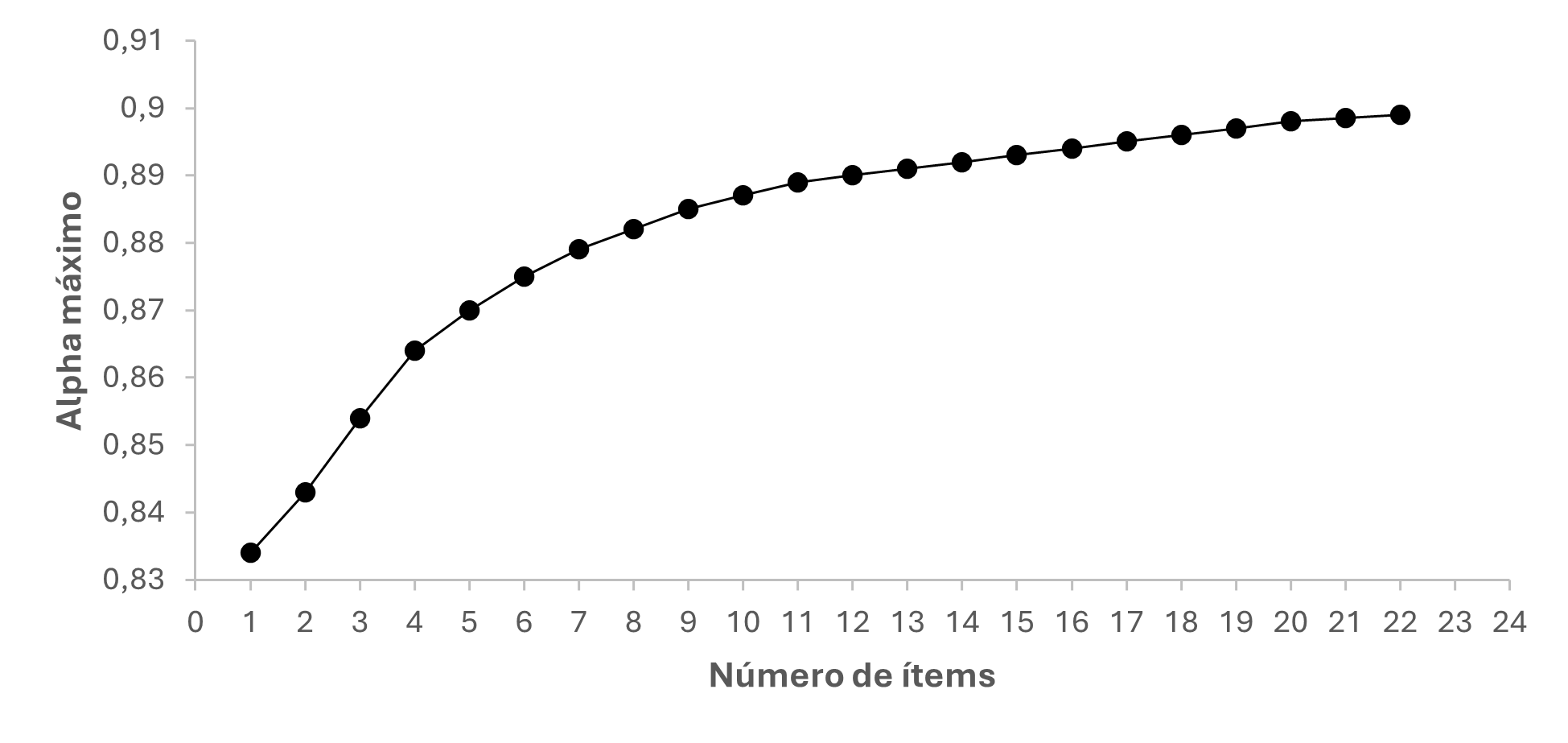
Municipal markets are key spaces for economic exchange, cultural preservation, community socialization, and the transfer of traditional knowledge. Despite their high heritage and experiential value, their potential for cultural tourism has been underutilized, and there are no specific instruments to assess public perception of these spaces. A mixed methodological design was applied to address this gap. In the exploratory qualitative phase, semi-structured interviews were conducted with tourism professionals and local users to generate preliminary items. Then, a Delphi panel of 21 experts reviewed and refined the items in three rounds. In the quantitative phase, the instrument was applied to a stratified probabilistic sample of 490 residents from the 32 urban parishes of Quito. Reliability was assessed using Cronbach’s alpha; internal consistency was evaluated through the item homogeneity coefficient [IHc], and dimensionality was analyzed using the Cronbach-Mesbah curve. An exploratory factor analysis was also performed. The final instrument consisted of 22 items grouped into three dimensions: social-cognitive, social-territorial, and social-cultural. Cronbach’s alpha was 0.927. All IHc values exceeded 0.20. The Cronbach-Mesbah curve showed upward stability. Factor analysis, with a Kaiser-Meyer-Olkin [KMO] measure of 0.889 and a statistically significant Bartlett’s test (p < 0.001), extracted four factors with eigenvalues greater than 1, explaining 77.8% of the variance. The instrument presented high reliability and psychometric robustness. Its multidimensional structure allows its application in various cities with public markets, facilitating its implementation in different urban contexts.
Downloads
Metrics
Article Details

This work is licensed under a Creative Commons Attribution-NonCommercial 4.0 International License.
The authors who publish in Siembra know and accept the following conditions:
- Authors retain the copyright and grant Siembra the right of first publication of the work, under the Creative Commons Attribution License. Third parties are allowed to use what has been published as long as they refer to the author or authors of the work and its publication in this journal.
 This content is licensed under a Creative Commons Attribution-Noncommercial 4.0 International (CC BY-NC 4.0).
- Authors maintain the copyright and guarantee Siembra the right to publish the manuscript through the channels it considers appropriate.
- Authors may establish on their own additional agreements for the non-exclusive distribution of the version of the work published in Siembra, acknowledging their initial publication in the same, such as in institutional repositories.
- Authors are authorized to disseminate their work electronically once the manuscript is accepted for publication.




References
Alamineh, G. A., Hussein, J. W., Endaweke, Y., y Taddesse, B. (2023). The local communities’ perceptions on the social impact of tourism and its implication for sustainable development in Amhara regional state. Heliyon, 9(6), e17088. https://doi.org/10.1016/j.heliyon.2023.e17088 DOI: https://doi.org/10.1016/j.heliyon.2023.e17088
Bernaola Ugarte, A. D., Garcia Garcia, M., Martinez Campos, N., Ocampos Madrid, M., y Livia, J. (2022). Validez y confiabilidad de la Escala Breve de Resiliencia Connor-Davidson (CD-RISC 10) en estudiantes universitarios de Lima Metropolitana. Ciencias Psicológicas.16(1), e-2545. https://doi.org/10.22235/cp.v16i1.2545 DOI: https://doi.org/10.22235/cp.v16i1.2545
Briones-Orellana, A., Heras-Olalla, J., y Heras-Barros, V. (2021). Transformaciones sociales y urbanas del entorno de los Mercados del Centro Histórico de Cuenca. Mercado 9 de Octubre y Mercado 10 de Agosto. Revista Urbano, 24(44), 20–33. https://doi.org/10.22320/07183607.2021.24.44.02 DOI: https://doi.org/10.22320/07183607.2021.24.44.02
Cardoso de Santana, J., Bem Maracajá, K. F., y De Araújo Machado, P. (2021). Turismo cultural y sostenibilidad turística: mapeo del desempeño científico desde Web of Science. Turismo y Sociedad, 28, 95-113. https://doi.org/10.18601/01207555.n28.05 DOI: https://doi.org/10.18601/01207555.n28.05
Ceballos-Álvarez, T. E. (2019). Turismo cultural urbano, una revisión de investigaciones y tendencias. Gestión Turística, (32), 85-115. https://doi.org/10.4206/gest.tur.2019.n32-05 DOI: https://doi.org/10.4206/gest.tur.2019.n32-05
Comisión Económica para América Latina y el Caribe [CEPAL]. (2002). Las nuevas funciones urbanas: gestión para una ciudad sostenible. División de Medio Ambiente y Asentamientos Humanos. Naciones Unidas, https://digitallibrary.un.org/record/466048?ln=es&v=pdf
Crespí Vallbona, M., y Domínguez Pérez, M. (2016). Los mercados de abastos y las ciudades turísticas. PASOS Revista de Turismo y Patrimonio Cultural, 14(2), 401-416. https://doi.org/10.25145/j.pasos.2016.14.026 DOI: https://doi.org/10.25145/j.pasos.2016.14.026
Cuvi, N. (2015). Un análisis de la resiliencia en Quito, 1980-2015. Bitácora Urbano Territorial, 25(2), 35-42. https://doi.org/10.15446/bitacora.v2n25.52036 DOI: https://doi.org/10.15446/bitacora.v2n25.52036
Cuvi, N. (2017). Las ciudades como mosaicos bioculturales: el caso del centro histórico de Quito. Revista Etnobiologia, 15(1), 5-25. https://revistaetnobiologia.mx/index.php/etno/article/view/138
Domínguez Medina, M. del R. (2024). Planificación urbana para el fomento del turismo sostenible, ciudad de Chitré, provincia de Herrera. Centros: Revista Científica Universitaria, 13(2), 216-235. https://doi.org/10.48204/j.centros.v13n2.a5298 DOI: https://doi.org/10.48204/j.centros.v13n2.a5298
Enríquez Negrete, D. J., y Sánchez-Medina, R. (2022). Construcción y validación de una escala para evaluar las consecuencias socio-psicológicas y afectivas del COVID-19. European Journal of Health Research, 8(1), 1-20. https://doi.org/10.32457/ejhr.v8i1.1753 DOI: https://doi.org/10.32457/ejhr.v8i1.1753
Floyd, F. J., y Widaman, K. F. (1995). Factor analysis in the development and refinement of clinical assessment instruments. Psychological Assessment, 7(3), 286-299. https://doi.org/10.1037/1040-3590.7.3.286 DOI: https://doi.org/10.1037//1040-3590.7.3.286
Fusté-Forné, F., Medina, F. X., y Mundet i Cerdan, L. (2020). La proximidad de los productos alimentarios: Turismo Gastronómico y Mercados de Abastos en la Costa Daurada (Cataluña, España). Revista de Geografía Norte Grande, 76, 213-231. https://doi.org/10.4067/S0718-34022020000200213 DOI: https://doi.org/10.4067/S0718-34022020000200213
Hernández Cordero, A., y Andreeva Eneva, S. (2016). ¿Mercados, museos o malls? La gentrificación de los mercados municipales en Barcelona y Madrid. EntreDiversidades. Revista de Ciencias Sociales y Humanidades, 1(6), 143-173. https://doi.org/10.31644/ED.6.2016.a05 DOI: https://doi.org/10.31644/ED.6.2016.a05
Herrero, J. (2010). El análisis factorial confirmatorio en el estudio de la estructura y estabilidad de los instrumentos de evaluación: Un ejemplo con el Cuestionario de Autoestima CA-14. Psychosocial Intervention, 19(3), 289-300. https://doi.org/10.5093/in2010v19n3a9 DOI: https://doi.org/10.5093/in2010v19n3a9
Jaramillo, P. (2010). The sustainability of urban heritage preservation: El Caso de Quito. Inter - American Development Bank [IDB]. https://doi.org/10.18235/0007769 DOI: https://doi.org/10.18235/0007769
Lacarrieu, M. (2016). “Mercados tradicionales” en los procesos de gentrificación/recualificación Consensos, disputas y conflictos. Alteridades, 26(51), 29-41. https://www.scielo.org.mx/scielo.php?script=sci_arttext&pid=S0188-70172016000100029
Linstone, H. A., Turoff, M., y Helmer, O. (eds.) (2002). The Delphi Method Techniques and Applications. Addison-Wesley Educational Publishers Inc https://www.foresight.pl/assets/downloads/publications/Turoff_Linstone.pdf
Lloret-Segura, S., Ferreres-Traver, A., Hernández-Baeza, A., y Tomás-Marco, I. (2014). El análisis factorial exploratorio de los ítems: Una guía práctica, revisada y actualizada. Anales de Psicologia, 30(3), 1151-1169. https://doi.org/10.6018/analesps.30.3.199361 DOI: https://doi.org/10.6018/analesps.30.3.199361
López, C. A. (2024). Turismo experiencial y su impacto positivo en las comunidades locales. claves para un turismo transformador a través de la inversión sostenible. Cuadernos del Centro de Estudios de Diseño y Comunicación, 223, 155-173. https://doi.org/10.18682/cdc.vi223.11180 DOI: https://doi.org/10.18682/cdc.vi223.11180
Matsunaga, M. (2010). How to factor-analyze your data right: do’s, don’ts, and how-to’s. International Journal of Psychological Research, 3(1), 97-110. https://doi.org/10.21500/20112084.854 DOI: https://doi.org/10.21500/20112084.854
Medina, A., y Cano-Ciborro, V. (2023). Three moments of migration as an urban generator: Solanda – Quito case. Bitácora Urbano Territorial, 33(2), 31-46. https://doi.org/10.15446/bitacora.v33n2.106777 DOI: https://doi.org/10.15446/bitacora.v33n2.106777
Morillo Moreno, M. C. (2011). Turismo y producto turístico. Evolución, conceptos, componentes y clasificación. Visión Gerencial, (1), 135-158. http://erevistas.saber.ula.ve/index.php/visiongerencial/article/view/3457
Nasa, P., Jain, R., y Juneja, D. (2021). Delphi methodology in healthcare research: How to decide its appropriateness. World Journal of Methodology, 11(4), 116-129. https://doi.org/10.5662/wjm.v11.i4.116 DOI: https://doi.org/10.5662/wjm.v11.i4.116
Observatorio Metropolitano de Seguridad Ciudadana [OMSC] (2022). Análisis demográfico del Distrito Metropolitano de Quito. OMSC. https://siomsc.quito.gob.ec/docs/2020/SubCapituloEvoluci%C3%B3nDemogr%C3%A1ficaDMQ.pdf
Okoli, C., y Pawlowski, S. D. (2004). The Delphi method as a research tool: an example, design considerations and applications. Information & Management, 42(1), 15-29. https://doi.org/10.1016/j.im.2003.11.002 DOI: https://doi.org/10.1016/j.im.2003.11.002
Osorio García, M. (2006). La planificación turística. Enfoques y modelos. Quivera, 8(1), 291-314. http://www.redalyc.org/articulo.oa?id=40180113
Ortega Palomo, G., y Urriza, J. I. (2023). El uso turístico sostenible de los mercados de abastos. Identificando claves a través del análisis de percepción de los comerciantes de los mercados de Málaga. Investigaciones Turísticas, (25), 121-147. https://doi.org/10.14198/INTURI.20786 DOI: https://doi.org/10.14198/INTURI.20786
Pérez-Gil, A. J., Chacón Moscoso, S., y Moreno Rodríguez, R. (2000). Validez de constructo: el uso de análisis factorial exploratorio-confirmatorio para obtener evidencias de validez. Psicothema 12(2), 442-446. https://www.psicothema.com/pdf/601.pdf
Salazar Dzul, B. R., González Damián, A., y Macias Ramírez, A. R. (2020). El turismo cultural y sus construcciones sociales como contribución a la gestión sostenible de los destinos turísticos. Revista Rosa Dos Ventos - Turismo e Hospitalidade, 12(2), 406-428. https://doi.org/10.18226/21789061.v12i2p406 DOI: https://doi.org/10.18226/21789061.v12i2p406
Stevic, I., Rodrigues, V., Breda, Z., Veríssimo, M., Ferreira da Silva, A. M., y Martins da Costa, C. M. (2024). Residents’ perceptions of negative tourism impacts and mitigation strategies: the case of Porto. International Journal of Tourism Cities, 10(4), 1488–1506. https://doi.org/10.1108/IJTC-11-2022-0254 DOI: https://doi.org/10.1108/IJTC-11-2022-0254
Šegota, T., Mihalič, T., y Perdue, R. R. (2024). Resident perceptions and responses to tourism: individual vs community level impacts. Journal of Sustainable Tourism, 32(2), 340-363. https://doi.org/10.1080/09669582.2022.2149759 DOI: https://doi.org/10.1080/09669582.2022.2149759
Tuapanta, J., Duque, M., y Mena, A. (2017). Alfa de Cronbach para validar un cuestionario de uso de TIC en docentes universitarios. Revista Descubre, (10), 37-48. https://dspace.espoch.edu.ec:8080/server/api/core/bitstreams/cea77ec6-5329-4957-beda-64433cd8f771/contenthttps://dspace.espoch.edu.ec:8080/server/api/core/bitstreams/cea77ec6-5329-4957-beda-64433cd8f771/content
Vio, F., Lera, L., Fuentes-García, A., y Salinas, J. (2016). Método Delphi para buscar consenso sobre metodologías educativas en alimentación saludable para alumnos de tercero a quinto año básico, sus familias y profesores. Nutrición Hospitalaria, 33(4), 801-807. https://doi.org/10.20960/nh.373 DOI: https://doi.org/10.20960/nh.373
Vivas, V., Cabanilla, E., y Vivas, R. (2025). Diseño y validación de un instrumento para jerarquizar mercados como atractivos turísticos. Rivar, 12(35), 116-137. https://doi.org/10.35588/dgmhyv06
Vivas Vivas, R. J., y Fuentes Moreno, A. G. (2024). Percepción de comunidad receptora sobre el turismo en los mercados municipales. Diseño y validación de un instrumento de medición. Revista Científica Ecociencia, 11(1), 47-65. https://doi.org/10.21855/ecociencia.111.857 DOI: https://doi.org/10.21855/ecociencia.111.857
Vivas-Vivas, R. J., Pazmiño-Mayorga, J. A., Caicedo-Chávez, J. D., Cepeda-Bastidas, D. A., y Corro-Alarcón, I. K. (2022). Encuesta: Nivel de conocimiento de la población urbana sobre los alimentos agroecológicos. Agronomía Mesoamericana, 34(1), 48359. http://www.dspace.uce.edu.ec/handle/25000/28166 DOI: https://doi.org/10.15517/am.v34i1.48359
Watkins, M. W. (2018). Exploratory Factor Analysis: A guide to best practice. Journal of Black Psychology, 44(3), 219-246. https://doi.org/10.1177/0095798418771807 DOI: https://doi.org/10.1177/0095798418771807